The way people search for information online is changing rapidly. Instead of relying exclusively on traditional search engine results, users are increasingly turning to AI-powered platforms such as ChatGPT, Google AI Overviews and Perplexity to discover information, compare services and find businesses. This shift creates new opportunities for companies to improve their online presence through Generative Engine Optimisation (GEO).
For businesses that want to remain competitive in 2026, understanding GEO is becoming an important part of a modern digital marketing strategy. By combining effective search engine optimisation with valuable content and strong online credibility, businesses can improve their chances of being discovered across traditional and AI-powered search experiences.
In this complete Generative Engine Optimisation guide for 2026, we explain what GEO means, how it works, how it differs from traditional SEO and which strategies businesses can use to strengthen their AI search visibility.
What is Generative Engine Optimisation (GEO)?
Generative Engine Optimisation is the process of improving website content, brand information and online authority to increase the chances of being referenced, cited or recommended in AI-generated search responses.
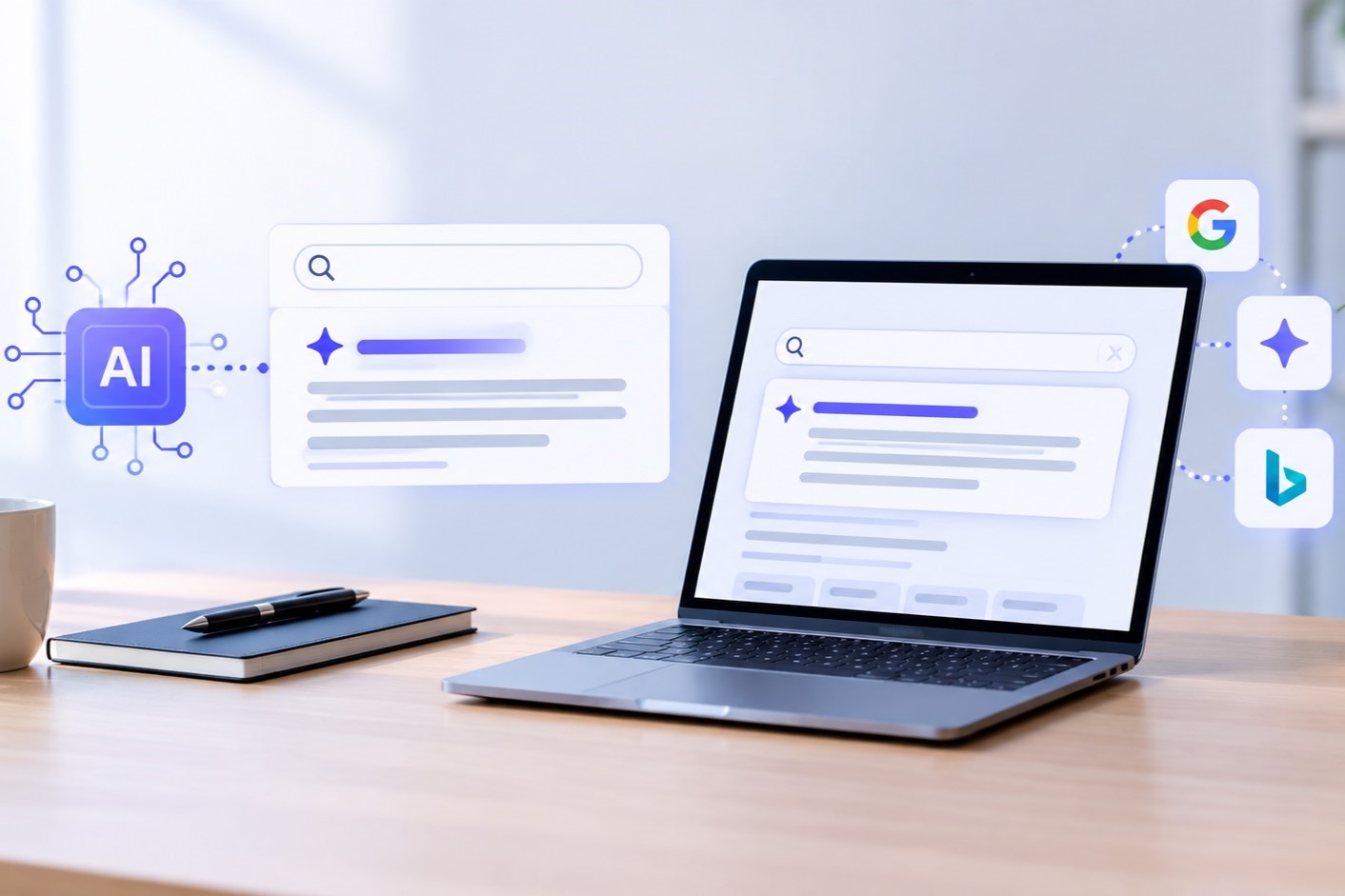
Traditional search engines typically display a list of relevant webpages. Generative AI search platforms can summarise information from multiple sources and present users with a conversational answer, sometimes including links to the websites used to support that answer.
GEO aims to make your business information clear, relevant, trustworthy and accessible so that AI-powered search experiences can discover and understand it.
For example, imagine someone searches for a professional SEO company in the UK using an AI-powered platform. If your website clearly explains your SEO services, demonstrates relevant expertise, and provides useful information, your business may have a better opportunity to appear in relevant AI-generated answers.
However, GEO does not guarantee that a particular platform will mention your business. Results depend on the platform, the user’s query, and its information retrieval and ranking systems.
How Does Generative Engine Optimisation Work?
Understanding how Generative Engine Optimisation works begins with recognising how AI search systems discover and use information.
Depending on the platform, AI systems may retrieve information from indexed webpages, analyse relevant sources and generate a response that addresses the user’s question. Some responses include citations or links that allow users to explore the original information.
A strong GEO SEO strategy helps ensure that your website can be discovered, understood and trusted.
Several factors can contribute to better AI search visibility:
- Relevant content: Your website answers the questions your target audience is asking.
- Clear information: Headings, descriptive paragraphs and logical page structures make your content easier to understand.
- Trust and expertise: Accurate information, credible references, original insights and genuine business details strengthen your website’s credibility.
- Technical accessibility: Search engines can crawl and index your important pages.
- Consistent brand information: Your business details and services are represented accurately across relevant online platforms.
Google’s official guidance confirms that established SEO practices remain important for its generative AI search experiences. Creating useful, original content and maintaining a technically accessible website remain key priorities.
GEO vs SEO: What is the Difference?
Search engine optimisation (SEO) focuses on improving a website’s visibility in traditional organic search results. Generative Engine Optimisation focuses more specifically on improving the likelihood of a brand or its content being included in AI-generated responses.
Although their objectives overlap, their emphasis can differ.
Traditional SEO involves keyword research, technical optimisation, content development, internal linking and earning relevant backlinks. GEO builds on these foundations by considering how clearly a business answers questions, demonstrates expertise and communicates information that AI-powered search systems may retrieve and reference.
For example, a traditional SEO strategy might target the keyword “SEO services in the UK”. A GEO-focused content strategy could also answer questions such as “How can a small business improve its Google rankings?” or “What should I look for when choosing an SEO agency?”
The two approaches should work together rather than compete. Strong SEO foundations can support visibility in AI search, while useful, specific content can serve people using both traditional and conversational search methods.
Answer Engine Optimisation (AEO) is another related term, commonly used for strategies that help content provide direct answers to user questions. GEO, AEO, and AI SEO overlap, and their definitions can vary across the industry.
Why is Generative Engine Optimisation Important for Businesses in 2026?
Consumers increasingly expect quick, relevant answers when researching products and services. AI-powered search experiences can influence which businesses people discover, compare, and consider before making a purchasing decision.
For businesses, effective AI search optimisation can support several goals.
- Greater brand awareness: Being referenced in relevant AI-generated responses can introduce your business to potential customers who may not have discovered your website otherwise.
- More opportunities to build trust: Helpful, accurate content can demonstrate your knowledge and give prospective customers useful information before they contact you.
- Support for customer research: Detailed service pages and educational articles can answer questions about pricing, processes, benefits and common challenges.
- A stronger overall SEO strategy: Creating useful content, improving technical accessibility and developing a clear online presence can benefit your broader digital marketing efforts.
GEO should not be viewed as a replacement for conventional SEO or as a guaranteed source of leads. It is an additional consideration within a broader strategy for sustainable online visibility.
Best Generative Engine Optimisation Strategies for 2026
If you want to understand how to optimise content for AI search engines, focus on practical improvements that benefit real users as well as search systems.
1. Create Helpful, Original and Informative Content
Publish content that answers genuine customer questions and provides more value than a generic overview. Include practical examples, professional insights, clear explanations and relevant supporting evidence.
Avoid publishing large numbers of repetitive articles simply to target different keyword variations. Originality, usefulness and accuracy are more valuable than producing content at scale without meaningful editorial input.
2. Answer Specific Questions Clearly
Organise articles around the questions your audience wants answered. Use descriptive headings, concise explanations and supporting details to make information easy to navigate.
For example, an article about SEO services could explain what SEO includes, how long results may take, what affects costs and how businesses can measure progress.
This approach supports both conventional search intent and conversational queries used in Generative AI search.
3. Strengthen Your Website’s Technical SEO
Your website should load efficiently, work well on mobile devices and allow search engines to crawl and index important pages.
Review your XML sitemap, robots.txt directives, canonical tags, internal links and indexing status. Make sure essential content is accessible and that important service pages are not unintentionally blocked.
Structured data can also help search engines interpret eligible information, provided it accurately reflects the visible page content. There is no special schema markup that guarantees inclusion in AI-generated answers.
4. Build Credibility and Demonstrate Expertise
Publish accurate, well-researched information and clearly explain your services, experience and business identity. Where appropriate, include genuine case studies, client testimonials, original research and examples of your work.
Maintain consistent business information across your website and relevant business profiles. Earn editorial links and mentions through valuable resources and legitimate digital PR rather than artificial link-building schemes.
5. Target Relevant Long-Tail Keywords
Long-tail keywords help you address specific user needs and search intentions. Examples include “Generative Engine Optimisation for businesses”, “How to improve visibility in Google AI Overviews” and “How to rank in ChatGPT search results”.
Use these phrases naturally where they fit the subject. You do not need to force every keyword into a single article; instead, build a useful collection of related content that covers your audience’s needs.
6. Monitor Performance and Refine Your Strategy
Track organic impressions, clicks, relevant keyword performance, leads and conversions using tools such as Google Search Console and analytics platforms.
Where available, use reporting for generative AI search features to understand how your pages are appearing. You can also test relevant questions across AI platforms and record whether your brand is mentioned, which sources are cited and how the results change over time.
Remember that manual checks provide only a snapshot, as AI answers can vary. Focus on measurable business outcomes rather than relying solely on estimated AI visibility scores.
How to Rank in ChatGPT Search Results and Improve Visibility in Google AI Overviews
Businesses often ask how to rank in ChatGPT search results or how to improve visibility in Google AI Overviews. There is no guaranteed method for securing a mention or citation, but several practical steps can strengthen your overall search readiness.
First, publish high-quality content that directly addresses relevant questions. Ensure that important pages are crawlable and indexed where appropriate, and maintain strong technical SEO foundations.
Next, provide accurate business and service information. Create detailed pages that explain what you offer, who your services are for and how customers can benefit. Support important claims with credible evidence and keep information up to date.
Finally, build a broader content strategy around your expertise. Helpful guides, detailed service pages, original insights and relevant industry resources can create more useful entry points for potential customers.
Avoid promises of guaranteed AI rankings, artificial brand mentions or technical shortcuts presented as secret GEO techniques. Sustainable visibility depends on relevance, quality and the systems each platform uses.
Why Choose Webvizion for SEO and AI Search Optimisation?
Webvizion helps businesses strengthen their online presence through professional digital marketing and search engine optimisation services. As search behaviour evolves, businesses need a strategy that considers both traditional organic search and emerging AI-powered discovery experiences.
Our approach focuses on the fundamentals that support sustainable visibility: technical SEO, keyword research, content optimisation, website performance, on-page improvements and a clear strategy aligned with your business goals.
Whether you want to improve your existing Google rankings, develop more effective website content or explore Generative Engine Optimisation opportunities, the right strategy begins with understanding your website, audience and competition.
We believe SEO should be transparent, practical and focused on meaningful results rather than unrealistic ranking promises. Our aim is to help businesses improve their search visibility, attract relevant visitors and create more opportunities to generate enquiries.
If you are looking for professional SEO services in the UK, contact Webvizion today. Discuss your website, SEO requirements and opportunities to strengthen your online presence.
Take the Next Step Towards Better Search Visibility
Generative Engine Optimisation is an increasingly relevant part of digital marketing in 2026, but it works best alongside a strong SEO foundation. Businesses that invest in useful content, technical accessibility, credible information and a clear understanding of customer needs can put themselves in a stronger position across changing search experiences.
Start by reviewing your website, identifying unanswered customer questions and improving your most important pages. With a consistent strategy, you can build a stronger online presence and prepare your business for the evolving relationship between search engines, AI platforms and customers.