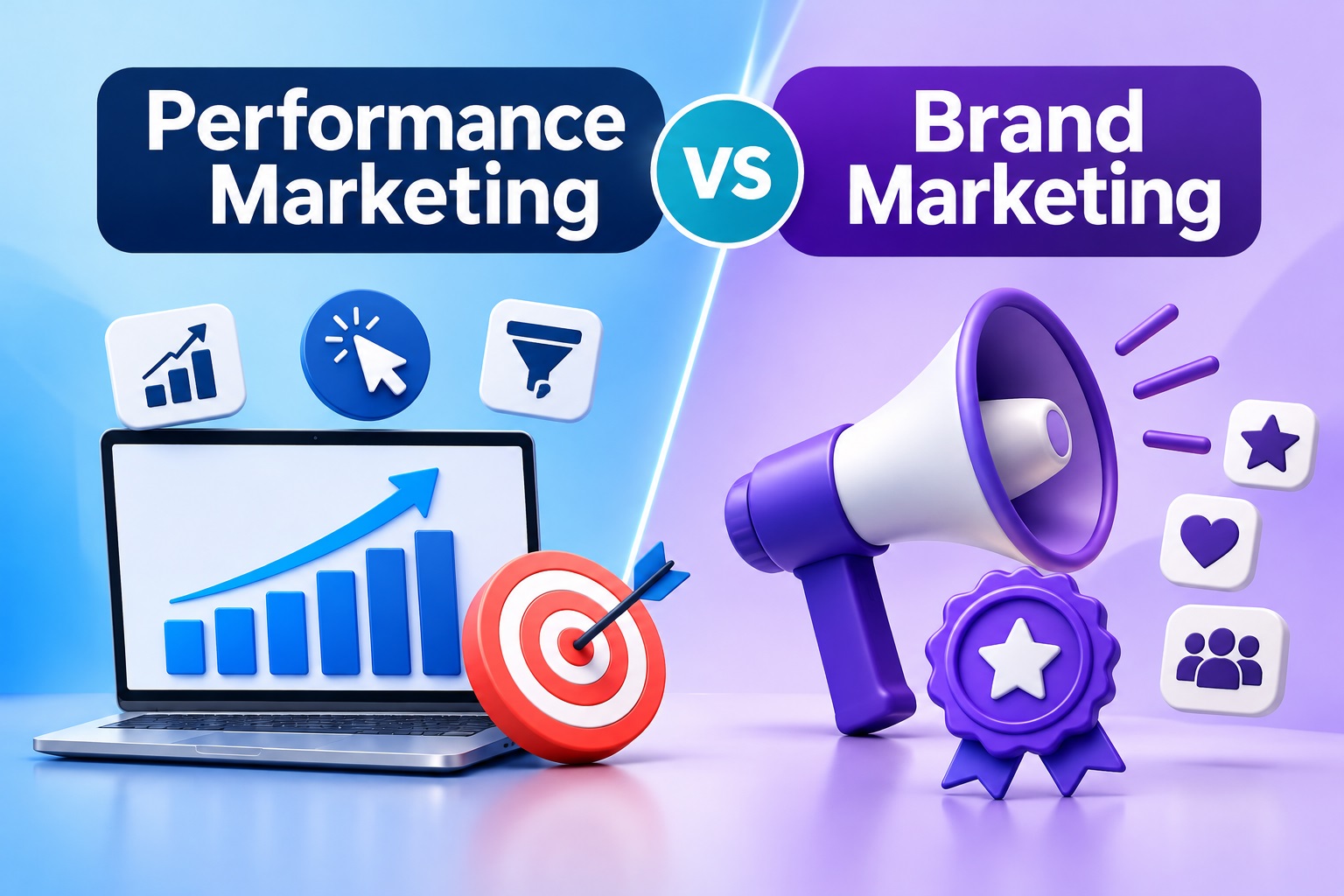
Performance Marketing vs Brand Marketing is one of the most important comparisons businesses need to understand when planning their digital marketing strategy. Both approaches play a significant role in business growth, but they serve different purposes. Performance marketing focuses on generating measurable results, such as leads, sales, website traffic and conversions, while brand marketing aims to build awareness, trust, recognition and long-term relationships with customers.
In today’s competitive digital landscape, businesses cannot always rely on just one marketing approach. They need a balanced strategy that attracts potential customers, encourages immediate action and builds a strong brand identity over time.
Whether you are a start-up, small business or established organisation, understanding the differences between these two strategies can help you invest your marketing budget more effectively. In this guide, we will explore how performance marketing and brand marketing work, their benefits, key differences and which approach is better for your business.
What Is Performance Marketing?
Performance marketing is a results-driven digital marketing strategy in which businesses invest in campaigns designed to achieve specific, measurable objectives. These objectives can include generating enquiries, increasing product sales, attracting website visitors, collecting leads or encouraging customers to complete a particular action.
Unlike traditional advertising, where success can sometimes be difficult to measure, performance marketing uses data and analytics to track campaign results. Businesses can understand how many people clicked an advertisement, how much each lead costs and how many visitors converted into paying customers.
Common performance marketing channels include:
– Pay-Per-Click (PPC) Advertising: Paid campaigns on Google and other search platforms to reach people actively searching for products or services.
– Social Media Advertising: Targeted campaigns on platforms such as Facebook, Instagram, LinkedIn and TikTok.
– Affiliate Marketing: Working with publishers and partners who promote products or services in return for a commission.
– Search Engine Marketing (SEM): Using paid search campaigns to increase visibility for relevant search terms.
– Conversion Rate Optimisation (CRO): Improving website pages and landing pages to turn more visitors into customers.
– Email Marketing Campaigns: Using targeted emails to encourage enquiries, purchases and repeat business.
A professional performance marketing company in UK can help businesses plan, launch, monitor and optimise campaigns based on their commercial objectives.
The biggest advantage of performance marketing is accountability. Businesses can track campaign performance and make adjustments based on real data rather than assumptions.
What Is Brand Marketing?
Brand marketing is a long-term strategy focused on developing a recognisable, trustworthy and memorable business identity. Rather than concentrating only on immediate sales, it communicates what a business represents, what makes it different and why customers should choose it over competitors.
Brand marketing creates an emotional connection between a business and its audience. It helps customers recognise a company, understand its values and develop confidence in its products or services.
For example, when customers repeatedly see consistent messaging, colours, visual identity and useful content from a company, they gradually become more familiar with the brand. Over time, this familiarity can influence their purchasing decisions.
Important elements of brand marketing include:
– Brand Identity: Developing a consistent logo, colour palette, typography and visual style.
– Brand Positioning: Establishing how a business wants to be perceived in its industry.
– Content Marketing: Publishing valuable blogs, articles, videos and social media content.
– Brand Storytelling: Communicating the company’s mission, values and unique selling points.
– Social Media Presence: Building recognition and engagement through consistent communication.
– Reputation Management: Developing customer confidence through positive experiences and credible communication.
A reliable brand marketing company in UK can help businesses develop a clear brand strategy, strengthen their market positioning and create consistent communication across digital platforms.
The primary objective is to make a business memorable and give customers a reason to trust it.
Performance Marketing vs Brand Marketing: Key Differences
Although both strategies support business growth, their objectives, methods and measurement techniques are different.
The main difference is that performance marketing encourages customers to take action, whereas brand marketing builds the awareness and trust that can influence their decisions.
Neither strategy should be considered a replacement for the other. Businesses often achieve better results when both approaches work together.
Benefits of Performance Marketing
Performance marketing is particularly useful for businesses looking to generate measurable results and understand the return on their advertising investment.
1. Measurable Results
Businesses can monitor impressions, clicks, leads, conversions and revenue. This makes it easier to understand which campaigns are producing valuable outcomes.
2. Better Budget Control
Advertisers can set campaign budgets, adjust bids and pause underperforming advertisements. This provides greater control over marketing expenditure.
3. Precise Audience Targeting
Businesses can target audiences based on interests, demographics, location, search behaviour and other relevant signals.
4. Faster Lead Generation
Paid campaigns can help businesses reach potential customers without waiting for organic visibility to develop.
5. Continuous Optimisation
Campaign data helps marketers test different advertisements, landing pages, headlines and audience segments to improve performance.
Benefits of Brand Marketing
Brand marketing delivers value by building a strong foundation for sustainable business growth.
1. Builds Customer Trust
Customers are more likely to consider businesses that communicate consistently and maintain a credible market presence.
2. Improves Brand Recognition
Consistent branding across websites, social media, advertising and content makes businesses easier to recognise.
3. Encourages Customer Loyalty
A strong brand identity and positive customer experience can encourage repeat purchases and long-term relationships.
4. Creates Competitive Differentiation
Brand marketing helps businesses communicate their unique strengths and stand out in crowded markets.
5. Supports Long-Term Growth
As brand awareness develops, businesses may benefit from increased branded searches, direct visits, referrals and customer consideration.
How to Measure Marketing Success?
Choosing the right measurement method is essential for understanding whether your marketing strategy is delivering value.
For performance marketing, businesses should monitor:
– Cost Per Lead (CPL): How much it costs to generate an enquiry.
– Cost Per Acquisition (CPA): The amount spent to acquire a customer.
– Return on Ad Spend (ROAS): Revenue generated compared with advertising expenditure.
– Click-Through Rate (CTR): The percentage of people who click an advertisement.
– Conversion Rate: The percentage of visitors who complete a desired action.
For brand marketing, businesses should consider:
– Brand awareness and recognition.
– Customer engagement and sentiment.
– Brand recall and customer preference.
– Branded search volume.
– Customer retention and loyalty.
Using these measurements together provides a more complete understanding of marketing effectiveness.
Which Is Better: Performance Marketing or Brand Marketing?
The answer depends on your business objectives, budget, target audience and growth stage.
Performance marketing is better when:
– You need to generate leads quickly.
– Your business wants to increase online sales.
– You have specific advertising targets.
– You want measurable returns from paid campaigns.
– You need to test new products, services or markets.
Brand marketing is better when:
– You are launching a new business.
– You want to establish a recognisable identity.
– Your industry has strong competition.
– You want to develop long-term customer relationships.
– You need to improve brand credibility and reputation.
For example, a new UK-based ecommerce business might use Google Ads and social media advertising to generate its first sales while developing a consistent brand identity through content marketing and social media.
Similarly, a professional services company can use performance campaigns to generate enquiries while investing in SEO, thought leadership and brand storytelling to establish credibility.
The best approach is not necessarily choosing one over the other. It is understanding when and how to use both.
Why Businesses Should Combine Performance Marketing and Brand Marketing?
A successful digital marketing strategy should support customers throughout their buying journey.
Brand marketing introduces your business to potential customers, communicates your values and creates familiarity. Performance marketing then helps convert interested audiences into leads and paying customers.
Here are some ways businesses can combine both approaches:
1. Maintain Consistent Brand Messaging
Ensure your paid advertisements, website, landing pages and social media profiles communicate the same brand identity and value proposition.
2. Invest in Content Marketing and Paid Advertising
Create useful content that builds authority while using targeted advertisements to reach relevant audiences and generate enquiries.
3. Use Retargeting Campaigns
Reconnect with people who have previously visited your website or interacted with your content. Familiarity with your brand can help make future advertising more effective.
4. Track Both Short-Term and Long-Term Results
Monitor conversions and revenue alongside brand awareness, engagement and customer retention.
5. Work With an Experienced Digital Marketing Agency
An experienced agency can help businesses develop an integrated strategy that combines brand positioning, paid advertising, SEO, content creation and conversion optimisation.
This approach allows businesses to focus on immediate commercial objectives without overlooking the importance of long-term brand development.
Grow Your Business With the Right Digital Marketing Strategy
Performance marketing and brand marketing are two essential parts of successful business growth. While performance marketing focuses on measurable actions and customer acquisition, brand marketing develops recognition, trust and lasting customer relationships.
Businesses that invest in both can build a stronger digital presence, attract qualified prospects and create opportunities for sustainable growth.
At Webvizion, we understand that successful marketing requires more than simply running advertisements. It involves developing a clear strategy that connects your brand with the right audience.
As a digital marketing partner, Webvizion helps businesses strengthen their online presence through strategic digital marketing, SEO, website design, branding and performance-focused campaigns.
If you are looking for the best digital marketing company in UK to support your business growth, explore how Webvizion can help you build a stronger brand and achieve measurable marketing results.
Frequently Asked Questions
1. What is the main difference between performance marketing and brand marketing?
Performance marketing focuses on generating measurable results, such as leads, sales and conversions. Brand marketing focuses on building brand awareness, recognition, trust and customer loyalty over the long term.
2. Is performance marketing better than brand marketing?
Neither is universally better. Performance marketing is useful for businesses seeking immediate leads and sales, while brand marketing supports long-term recognition and customer relationships. Combining both creates a more balanced marketing strategy.
3. Can small businesses benefit from brand marketing?
Yes. Small businesses can use consistent branding, social media content, SEO and storytelling to establish credibility and attract customers. Brand marketing does not always require a large advertising budget.
4. How long does brand marketing take to show results?
Brand marketing is a long-term investment. Improvements in recognition, customer perception and trust generally develop over time. The timeframe depends on the industry, audience, competition and consistency of marketing activities.
5. Should I hire a digital marketing agency for performance and brand marketing?
Working with an experienced digital marketing agency can help businesses develop an integrated strategy, manage advertising campaigns, strengthen brand identity and measure marketing performance. The right agency will align its activities with your business goals and budget.